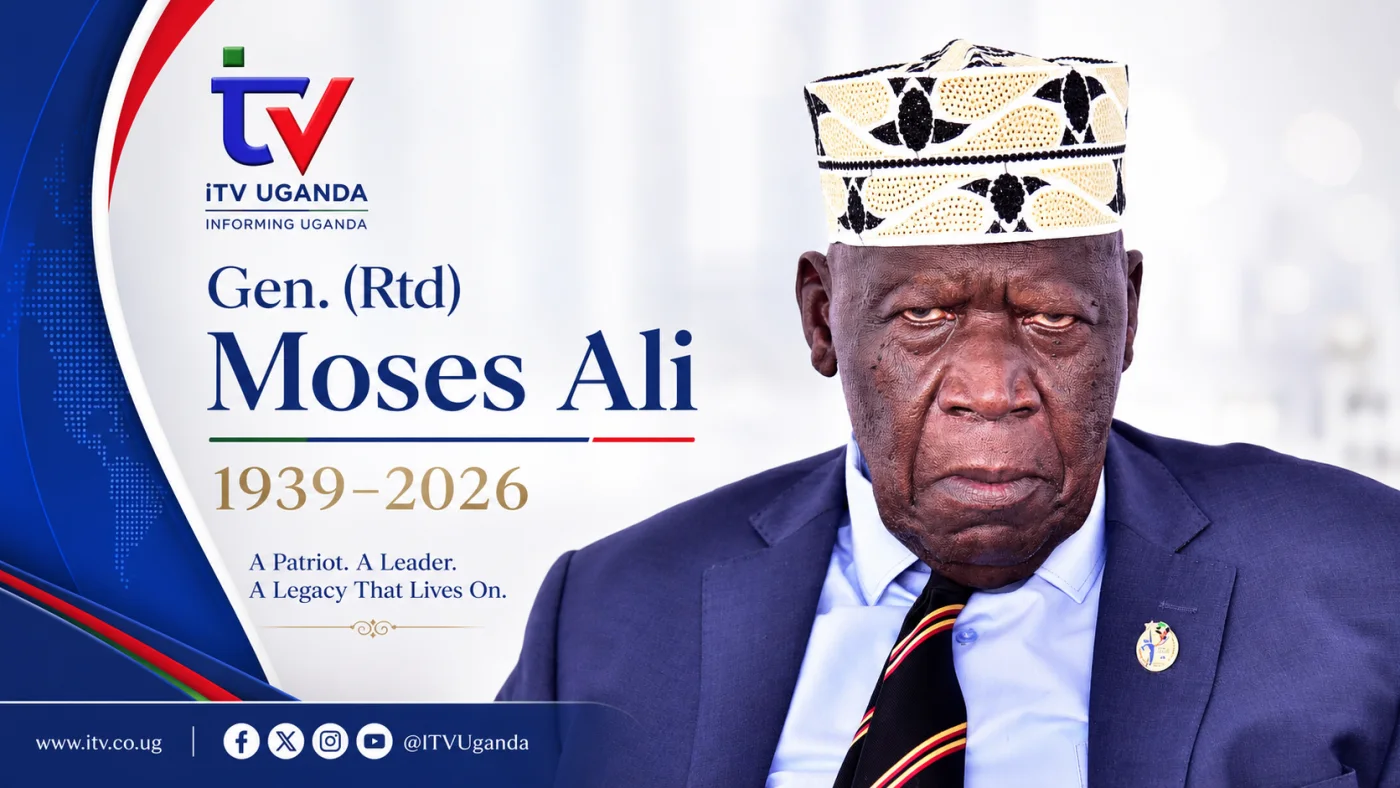
General (Rtd) Moses Ali was one of Uganda’s longest-serving military and political leaders, with a public career that stretched across more than five decades and several of the country’s most important political transitions. He served as a soldier, senior minister, rebel commander, peace negotiator, Member of Parliament and Deputy Prime Minister. His journey took him through the governments of Idi Amin, Milton Obote and President Yoweri Museveni, making him one of the most enduring figures in Uganda’s post-independence history.
Early life in AdjumaniGen. Ali died on Saturday, 18 July 2026, aged 87, while serving as the Member of Parliament for Adjumani West County. He had taken his oath as a member of the 12th Parliament in May 2026.
Moses Ali was born on 5 April 1939 in Meliaderi Village, Ataboo Parish, Pakelle Sub-county, in present-day Adjumani District. His childhood was marked by hardship. He reportedly lost both parents when he was about 11 years old and was raised under the care of relatives. At different stages, he worked in people’s gardens to raise money for school requirements and once lost an academic year because his family could not afford the fees.
Before joining the military, Ali worked as a teacher at Kiotch Goma Church of Uganda Primary School and Anaka Catholic Girls School. His early experiences of poverty and interrupted education would later influence his interest in supporting education and community development in the West Nile region.
From teacher to military officerAli joined the army in 1968 and was commissioned as a Second Lieutenant in 1969. He received military training in Uganda and Israel and later attended staff training in the United Kingdom. He rose rapidly through the military ranks during the early 1970s, serving in Uganda’s paratrooper structures before becoming a senior officer. During President Idi Amin’s government, Ali entered national political leadership. He served as Minister of Provincial Administration, a position associated with internal affairs, and was later appointed Minister of Finance.
His service under Amin placed him at the centre of one of the most controversial periods in Uganda’s history. His relationship with the government later deteriorated, and he eventually lost his senior position and went into exile.
Rebel leader during the Obote governmentFollowing the fall of Amin’s government in 1979 and the political instability that followed, Ali became a leading figure in the Uganda National Rescue Front, commonly known as the UNRF. The armed movement operated mainly in the West Nile region and opposed President Milton Obote’s second government during the early 1980s.
After the National Resistance Movement took power in 1986, Ali entered peace negotiations with the new government. His fighters later joined the national forces, helping to bring an end to one phase of armed conflict in West Nile. The UPDF has recognised his role in the 1986 peace talks, describing the reconciliation process between the UNRF and government as an important contribution to national unity and stability.
From rebellion to governmentThe peace arrangement marked a major turning point in Ali’s life. Instead of remaining outside government, he became part of the new administration and resumed service in both the military and political leadership. He held several ministerial portfolios over the following decades, including responsibilities connected to youth, culture and sports; tourism and wildlife; trade and industry; internal affairs; disaster preparedness; and refugees.
He also served in Parliament and represented constituencies in Adjumani for several terms. His continued electoral support in West Nile helped him maintain a place in national politics even when he was temporarily outside Cabinet or Parliament.
His military rank also continued to rise. He was promoted to Lieutenant General in 2003 and General in 2012.Deputy Prime Minister and government leader
Gen. Ali held several of Uganda’s most senior Cabinet positions. He served as Third Deputy Prime Minister and Deputy Leader of Government Business from 2011 to 2016. He then became First Deputy Prime Minister from June 2016 until May 2021. From June 2021 to May 2026, he served as Second Deputy Prime Minister and Deputy Leader of Government Business in Parliament.
In that position, he supported the coordination and presentation of government business before Parliament while also promoting government development programmes in Adjumani and other parts of the country. The Office of the Prime Minister described him as a public servant whose career exceeded 50 years and credited him with promoting national unity, citizen engagement and government programmes including the Parish Development Model, Emyooga, Operation Wealth Creation and the Youth Livelihood Programme.
The peace and reconciliation legacyOne of Gen. Ali’s most significant contributions was his transition from armed opposition to peaceful political participation. His experience as a former rebel commander gave him a distinctive place in later peace and reconciliation efforts involving West Nile armed groups.
In April 2025, national leaders commemorating the West Nile peace process recognised the former UNRF leadership’s role in ending armed conflict and opening a new period of peace and development in the region. The government also acknowledged the peace agreement signed with the Uganda National Rescue Front II in 2002, which further contributed to the pacification of West Nile. Gen. Ali remained an important voice for former fighters, their families and communities affected by the region’s years of conflict.
Education later in lifeDespite beginning his working life as a teacher and military officer, Ali returned to formal education later in life. He studied law at the University of Wolverhampton and Makerere University before attending the Law Development Centre, where he completed a Diploma in Legal Practice. His decision to study law while already a senior national leader reflected his interest in continued learning and his desire to strengthen his work in Parliament and public administration.
A long and complex public legacy Gen. Moses Ali’s life cannot be understood through only one political period.He served in the Amin government, commanded a rebel movement, negotiated with the NRM government and later became one of President Museveni’s longest-serving ministers. His career therefore reflected both the conflicts and political reconciliations that shaped modern Uganda. Supporters remember him as the “Lion of Adjumani,” a senior leader who advocated for West Nile, supported development programmes and participated in national peacebuilding.
His history also places him within difficult and contested periods of Uganda’s past, particularly his senior service during the Amin government and his later participation in armed rebellion. What remains undisputed is that Gen. Moses Ali occupied a major place in Uganda’s military and political story. From his birth in rural Adjumani in 1939 to his final term in the 12th Parliament in 2026, his life followed the country through dictatorship, war, rebellion, reconciliation and decades of constitutional government.
His death closed one of the longest public-service careers in Uganda’s post-independence history.