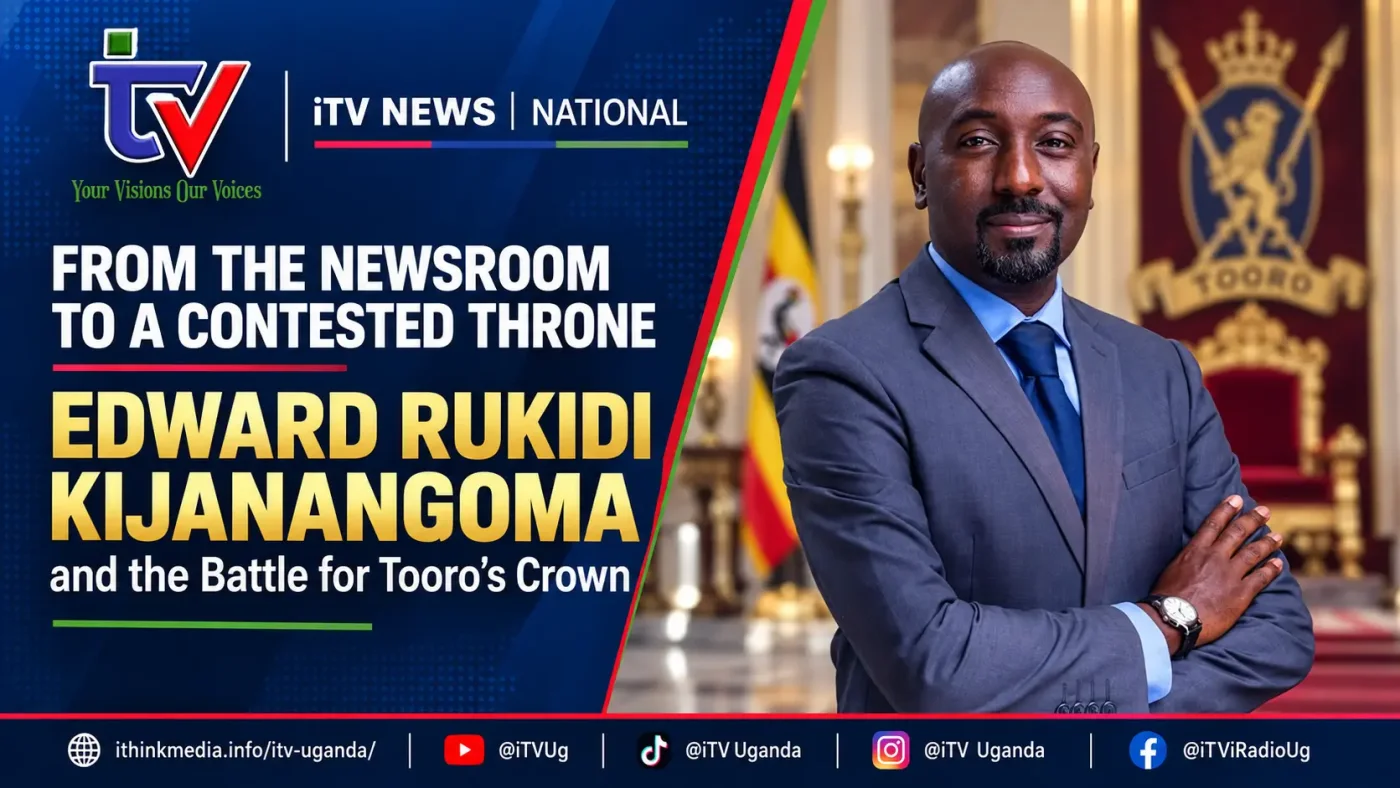
For years, Edward Rukidi Kijanangoma sat behind a television news desk and told Ugandans the stories shaping their country.
Now, he has become one of them.
The Uganda Broadcasting Corporation journalist, news anchor and editor has been selected by the Babiito royal clan to succeed the late Rukirabasaija Omukama Oyo Nyimba Kabamba Iguru Rukidi IV as King of Tooro.
His supporters are already calling him Edward Rukidi Nyabongo I.
He has performed one of the ancient rituals associated with succession at the Karambi Royal Tombs. He has spoken about what he wants to do as King. The head of the Babiito clan has publicly declared him the new Omukama.
But Tooro's throne is not yet at peace.
Queen Mother Best Kemigisa and other members of the Royal Family have challenged the process that produced Kijanangoma. They say King Oyo left a Will setting out a completely different succession arrangement, beginning with a son whose identity has not been publicly revealed.
The Attorney General has now advised President Yoweri Kaguta Museveni that King Oyo's Will should guide the succession unless its validity is successfully challenged in court.
Justice and Constitutional Affairs Minister Norbert Mao has meanwhile said the succession process cannot be considered complete for purposes of Government recognition until the dispute is resolved and the new monarch is formally gazetted.
And the Babiito have rejected that legal interpretation, insisting that their customary process was valid and that Kijanangoma remains their chosen King.
What began as the question of who would replace King Oyo has therefore become something much bigger.
It is now a struggle over royal blood, tradition, a King's final wishes, the authority of the Babiito, the law of Uganda and ultimately who will be recognised as the next undisputed Omukama of Tooro.
The journalist chosen for a throne
Before his name suddenly became central to the Tooro succession, Edward Rukidi Kijanangoma was known to many Ugandans through television.
He worked as a journalist, news anchor and editor with the Uganda Broadcasting Corporation, the national broadcaster.
But behind the television career was a direct connection to one of Uganda's oldest royal institutions.
Kijanangoma belongs to the Babiito royal clan, the ruling dynasty of Tooro.
He is the son of the late Prince Christopher Paul Kijanangoma and a grandson of Omukama Sir George David Matthew Kamurasi Rukidi III, the King of Tooro who reigned from 1928 until 1965.
That makes him a member of the same wider royal generation from which the family of the late King Oyo also descended.
King Oyo's father, Patrick David Matthew Rwamuhokya Kaboyo Olimi III, was also a son of King Rukidi III.
Edward Kijanangoma therefore did not emerge from outside the royal institution.
He came from within the Babiito bloodline.
King Oyo dies and the succession question begins
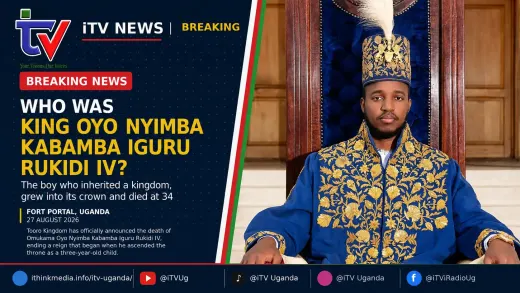
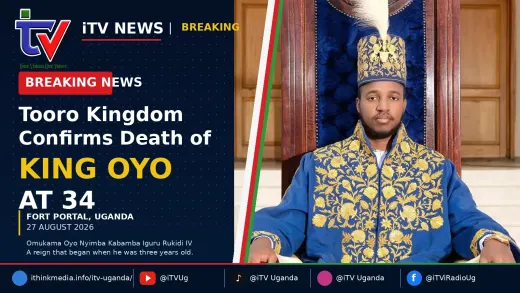
King Oyo died in the United States on August 27, 2026, aged 34, after battling cancer.
His death brought an end to a reign that had lasted almost 31 years.
Oyo had ascended the throne in September 1995 when he was only three years old following the death of his father, Omukama Patrick Kaboyo Olimi III.
For an entire generation of Batooro, Oyo was the only King they had ever known.
His sudden death therefore created not only grief, but an immediate constitutional and cultural question.
Who would become the next Omukama?
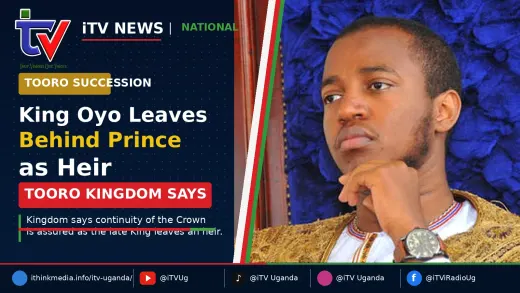
On the very night his death was announced, an official statement issued by Tooro Kingdom said the continuity of the Crown was assured and stated that King Oyo had left behind a Prince who was his heir.
The Prince was not identified.
The Kingdom said his identity would be revealed at the appropriate time in accordance with Tooro customs and traditions.
That statement would later become one of the most important pieces in the succession controversy.
The Babiito establish a succession committee
As preparations began to bring King Oyo home for burial, the Babiito royal clan moved to address the question of succession.
A 21-member Royal Succession Committee was established under the leadership of Omujwera Musuuga Charles Kayondo Kamurasi, the head of the Babiito clan.
The committee considered potential successors from different generations of the royal family.
According to members of the committee, the process examined leadership competence, education, experience and knowledge of Tooro culture, customs, traditions and royal rituals.
The committee said it did not simply identify a person because he was the closest relative of the late King.
It considered the wider royal lineage.
One major problem, however, quickly emerged.
The Babiito said that although they had been informed that King Oyo had left behind a son, the alleged child had not been presented to them and they had not been given sufficient information about his identity or whereabouts.
The committee therefore proceeded with its own succession process.
Edward Kijanangoma is selected
On the evening of September 9, 2026, the Babiito announced their decision at Karuziika Palace.
Prince Edward Rukidi Kijanangoma had been selected to become the next Omukama of Tooro.
Monsignor Isaiah Mayombo read the announcement on behalf of the Babiito and the succession committee.
A resolution supporting Kijanangoma had been signed by 19 members of the committee.
The Babiito said they had conducted consultations and due diligence before settling on him and that his eventual enthronement would be conducted according to Tooro traditions and customs.
For a moment, it appeared that the uncertainty surrounding the succession had been settled.
It had not.
The Royal Family rejects the announcement
The announcement immediately exposed a serious division within the royal house.
Princess Ruth Nsemere Komuntale, King Oyo's elder sister, publicly rejected the selection.
Queen Mother Best Kemigisa also challenged the process, while Princess Elizabeth Bagaaya was among members of the wider Royal Family who disputed the decision.
Their central argument was that the Babiito process had overlooked the wishes of the late King himself.
They said King Oyo had left a written Will.
And according to them, that Will clearly addressed what was supposed to happen to the throne after his death.
The 2022 Will at the centre of the dispute
The document at the centre of the controversy is reported to have been signed by King Oyo on September 14, 2022.
According to the reported contents of the Will, if King Oyo died leaving a son who was legally recognised as his biological son and capable of assuming the throne, that son was to become his heir.
The Will reportedly went further.
If the son could not succeed, the next person named was Prince Komwiswa Yoweri, a cousin of King Oyo and son of Omujwera Musuuga Charles Kamurasi.
If Prince Komwiswa Yoweri could not take the throne, another cousin, Prince Nyaika Solomon, was reportedly listed next.
That means the reported Will did not merely refer to an unnamed child.
It established an alternative succession chain.
The Babiito, however, dispute the way the Will is being used.
They argue that the child referred to in the document has never been presented to them.
They have also raised cultural objections to the alternative candidates named in the Will, arguing that a Tooro King cannot have a living father and pointing out that the father of the two princes is still alive.
That disagreement has placed royal custom and the reported wishes of the deceased King on a collision course.
The mystery of King Oyo's son
At the heart of the entire dispute remains one unanswered question.
Who is King Oyo's son?
The existence of an heir was first publicly asserted in the official statement announcing the King's death.
Members of the Royal Family have subsequently maintained that the late King had a biological son and that the boy is protected by the succession provisions contained in Oyo's Will.
But the child's name, age, mother and present circumstances have not been formally disclosed to the public.
The Babiito say this lack of presentation was one of the reasons their committee proceeded beyond King Oyo's immediate line and considered members of the wider royal family.
The Royal Family, on the other hand, maintains that the existence of the Will should have stopped the committee from simply selecting another candidate.
Until the identity and legal status of the Prince are formally established, the question is likely to remain central to the dispute.
King Oyo is buried, but the throne remains disputed
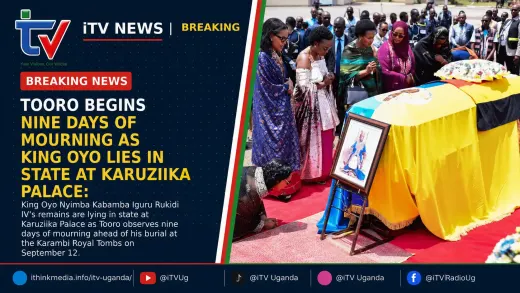
King Oyo was laid to rest at the Karambi Royal Tombs on September 12, 2026, exactly 31 years after the date on which he had ascended the throne.
His burial was deeply symbolic.
It was also closely connected to the succession.
Under Tooro royal tradition, the successor to a deceased King participates in specific rituals surrounding the burial.
One of the most significant involves throwing nine coffee beans into the grave of the deceased monarch.
Prince Edward Rukidi Kijanangoma performed that ritual at Karambi.
For his supporters and the Babiito leadership, the act carried profound cultural meaning and reinforced the decision already taken by the succession committee.
But legally, it did not end the dispute.
The Attorney General enters the battle
The succession controversy eventually reached the highest levels of Government.
President Museveni sought legal advice from the Attorney General on how the matter should be handled.
Attorney General Sam Mayanja subsequently advised that King Oyo's Will should be followed and that its validity could only be successfully challenged through a court of law.
The Attorney General also advised that the nine-coffee-bean succession ritual should have been suspended until the dispute had been resolved.
That advice became particularly significant because Kijanangoma later performed the ritual during King Oyo's burial.
The Attorney General's position is that the ritual itself cannot conclusively determine the succession where a genuine dispute remains unresolved.
He further pointed to Uganda's Constitution, the Institution of Traditional or Cultural Leaders Act, 2011, and the customs of Tooro as part of the legal framework governing the matter.
Government says the matter is not finished
President Museveni has avoided declaring either side the final winner.
In a message delivered at King Oyo's funeral by Deputy Speaker Thomas Tayebwa, the President appealed to the Batooro to resolve the disagreement peacefully and legally and to protect the unity of the Kingdom.
The message was significant.
Government said it would be ready to work with the new King when the question of the new Omukama had been resolved.
Justice and Constitutional Affairs Minister Norbert Mao has since made the Government position even clearer.
He says the installation of a cultural leader depends on the traditions of the community, but where there is a dispute, the established legal process must first be followed.
The new monarch must eventually be formally recognised through publication in the Uganda Gazette.
According to Mao, that stage cannot simply be completed while the underlying rivalry remains unresolved.
The Babiito reject the Attorney General's advice
On September 15, the succession dispute entered another phase.
The Babiito royal clan rejected the Attorney General's legal opinion and maintained its support for Edward Rukidi Kijanangoma.
Fr Charles Oyo, spokesperson for the Babiito royal clan and a member of the succession committee, argued that the Attorney General's advice had been requested by President Museveni and addressed to the President rather than to the Babiito.
The clan therefore says it does not consider itself bound by that opinion.
The Babiito also maintain that they do not see themselves as the party creating a succession dispute.
From their perspective, their committee exercised its traditional mandate, selected Kijanangoma and completed the required cultural process.
Those challenging the committee's decision, they argue, must pursue the appropriate mechanism if they want the result overturned.
The positions are therefore becoming increasingly defined.
The Royal Family relies heavily on King Oyo's Will.
The Babiito rely on their authority under Tooro custom and the decision of their succession committee.
The Attorney General says the Will should guide the process unless a court rules otherwise.
And Government says it wants a peaceful and lawful resolution before final recognition.
The law does not simply choose a King
Uganda's Constitution recognises traditional and cultural leaders, but the central Government does not simply appoint the Omukama of Tooro.
The question of who should occupy a traditional throne is rooted primarily in the customs, traditions and practices of the relevant community.
But Uganda's laws also provide a mechanism for resolving disputes when competing factions cannot agree.
Under the Institution of Traditional or Cultural Leaders Act, succession disputes are expected to first go through recognised cultural structures such as elders, clan leaders or another representative body accepted by the community.
If those mechanisms fail, the dispute can ultimately reach the courts.
This is why the disagreement in Tooro cannot be reduced to a simple argument over whether culture or Government has the final word.
Both culture and law now matter.
Who is Edward Rukidi Kijanangoma beyond the succession?
One of the most unusual aspects of the story is Kijanangoma himself.
Unlike King Oyo, whose public identity had been shaped by the throne since he was three years old, Kijanangoma built his adult public life largely outside the palace.
He became familiar to Ugandans as a journalist.
He worked at UBC as a news anchor and editor, appearing before television audiences to report and explain national events.
His royal heritage existed alongside that professional life rather than defining it completely.
Now the two worlds have collided.
The man who once reported Uganda's news is at the centre of a national story involving monarchy, constitutional law, cultural authority and family conflict.
His first message is about unity
Following King Oyo's burial, Kijanangoma began speaking publicly about what he would want his reign to represent if his succession is ultimately confirmed.
His central message has been unity.
He has argued that the Kingdom does not belong only to the Babiito royal clan but to all Batooro.
He has promised a more accessible palace and said he wants ordinary people to feel that Karuziika belongs to them.
He has also spoken about reviving participation in Empango celebrations, strengthening education and scholarship opportunities, promoting development and continuing some of the initiatives associated with King Oyo.
He has indicated that he does not want to be a monarch who remains isolated inside the palace.
Instead, he says he wants to travel, meet Batooro and rebuild stronger connections between the monarchy and its subjects.
Those ambitions, however, depend on one fundamental issue being settled first.
Whether he will become the undisputed King.
There is still no final coronation programme
Despite the Babiito declaration and the performance of succession rituals, there is still no universally accepted conclusion to the process.
No final coronation programme resolving the dispute has been announced.
Government recognition remains tied to the legal and customary process.
The Royal Family has not withdrawn its reliance on King Oyo's Will.
The identity of the Prince described as Oyo's biological heir has not been publicly established.
The Babiito have not withdrawn their selection of Kijanangoma.
And as of September 15, the disagreement has not been finally determined by a court.
A Kingdom at a crossroads
Tooro has survived royal deaths and succession disputes before.
King Oyo's own accession in 1995 was not entirely free from disagreement.
But his three decades on the throne eventually produced an era in which the institution of the Omukama became closely identified with one man.
His death has reopened questions that remained largely invisible while he was alive.
Who has the final authority to identify a King?
How much weight should a deceased monarch's Will carry?
What happens when the Babiito's understanding of custom conflicts with the position of the King's immediate family?
And how should Government respond without appearing to choose a cultural leader for the people of Tooro?
Those questions are now being tested in real time.
So, does Tooro have a new King?
The answer depends on which part of the succession process is being considered.
The Babiito royal clan has selected Prince Edward Rukidi Kijanangoma and recognises him as the successor to King Oyo.
He has been styled Edward Rukidi Nyabongo I by those supporting his elevation.
He has performed an important succession ritual at the grave of the late King and has begun speaking about his intended reign.
But his claim remains challenged by members of King Oyo's family.
The Attorney General has advised that King Oyo's reported Will should guide the succession unless it is overturned through the courts.
Government says the dispute must be resolved before formal recognition and gazettement can complete the process.
And the Babiito have responded that their cultural decision stands.
So Tooro has a man selected for the throne.
But it does not yet have a succession accepted by everyone.
That distinction is important.
The next chapter has not yet been written
King Oyo's burial closed one of the most remarkable chapters in Uganda's royal history.
The chapter that follows is still being written.
Edward Rukidi Kijanangoma may ultimately become the fully recognised Omukama of Tooro.
King Oyo's undisclosed son may emerge and force the Kingdom to confront the provisions of the late King's Will directly.
The dispute may be resolved through consultation among the Royal Family, Babiito elders and Government.
Or it may eventually require determination through Uganda's legal system.
What is already clear is that Tooro's transition after King Oyo will not be remembered as an ordinary succession.
It has become a test of how an ancient monarchy navigates modern law, family authority, royal tradition and the wishes of a dead King.
At the centre of it stands Edward Rukidi Kijanangoma.
A journalist.
A Prince of the Babiito.
A man already declared King by one of Tooro's most powerful traditional institutions.
And, for now, the central figure in a contest over who will inherit the crown King Oyo carried for almost 31 years.
The Babiito have made their choice. The Royal Family has raised its objection. Government has called for law and unity. Tooro now waits for the dispute over its next Omukama to be finally resolved.