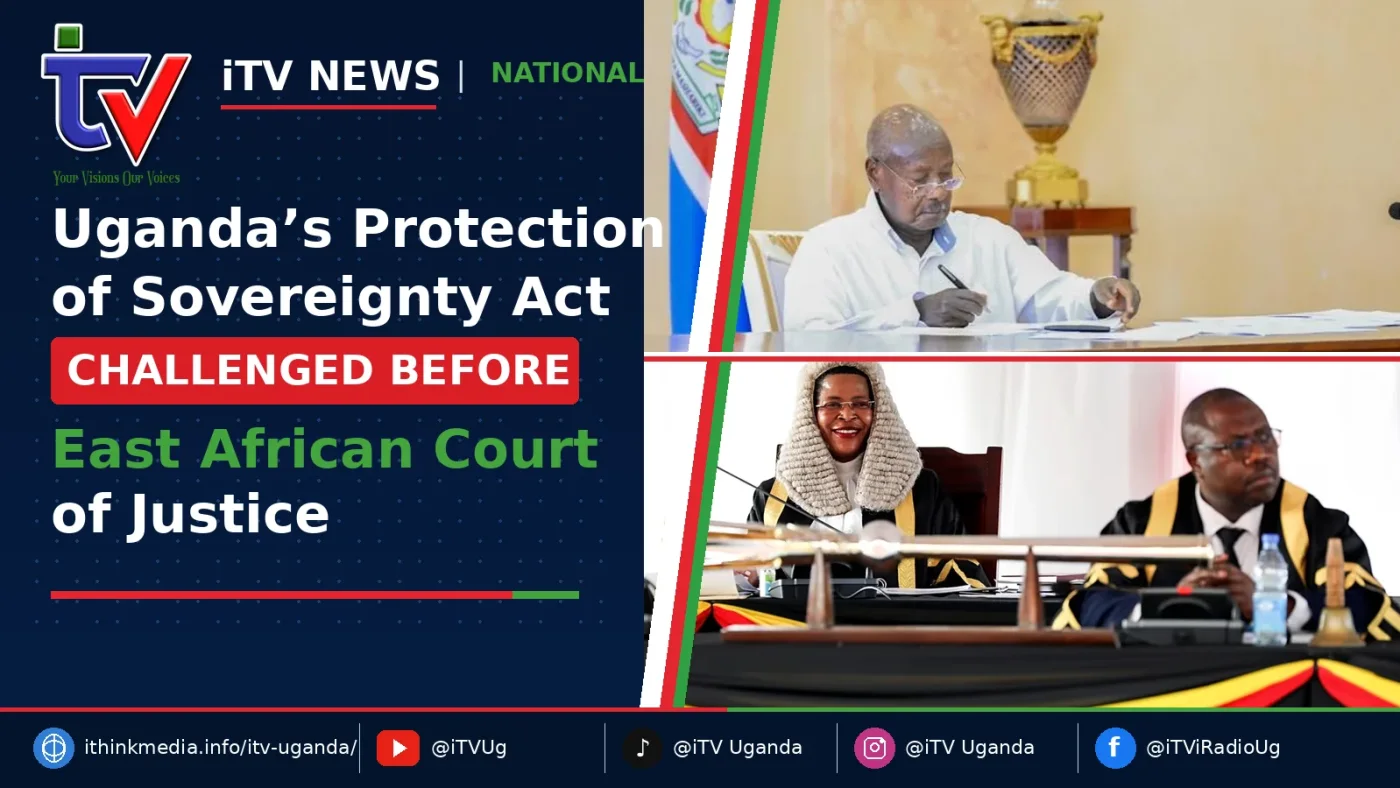
KAMPALA, Uganda — Uganda’s controversial Protection of Sovereignty Act, 2026 has entered a new legal battle at the East African Court of Justice, where four civil society organisations are seeking to stop the government from enforcing 25 sections they allege are incompatible with Uganda’s obligations under the East African Community Treaty.
The case was filed on 21 July 2026 but became publicly reported on 11 August, moving scrutiny of the law beyond Uganda’s domestic courts and into the regional judicial system responsible for interpreting and applying the EAC Treaty.
The applicants are the Centre for Environmental Research and Agriculture Innovations and Youth for Green Communities from Uganda, Natural Justice from Kenya, and the Organization for Community Engagement from Tanzania.
They have asked the East African Court of Justice to direct the Ugandan government to take legislative, administrative or other measures necessary to bring the Protection of Sovereignty Act into conformity with the EAC Treaty.
They are also seeking an order restraining Uganda from applying or enforcing 25 sections of the law which they contend violate the country’s regional obligations.
The allegations have not yet been determined by the Court. The filing of the case does not by itself suspend the law or amount to a judicial finding that any provision is unlawful.
CSOs cite EAC Treaty obligations
At the centre of the case is the applicants’ argument that restrictions imposed by the Sovereignty Act could undermine civil society participation and cross-border cooperation within the East African Community.
They cite several provisions of the EAC Treaty, including Article 5(3)(g), which identifies stronger partnerships with the private sector and civil society as part of achieving sustainable socio-economic and political development within the Community.
The applicants also rely on Articles 6(d) and 7(2), which establish principles including good governance, democracy, accountability, transparency, the rule of law, social justice and respect for universally accepted standards of human rights.
They further cite Article 8, under which EAC Partner States undertake to create conditions favourable to achieving the objectives of the Community and to refrain from measures likely to jeopardise those objectives.
Article 127 of the Treaty is another significant part of the case. It commits Partner States to providing an enabling environment for civil society and the private sector to participate in the development of the Community.
What the Sovereignty Act does
The Protection of Sovereignty Act was signed by President Yoweri Museveni on 17 May 2026 and subsequently came into force after publication.
The law establishes a regulatory framework governing persons or organisations classified as agents of foreigners and regulates certain foreign-supported activities, funding and assistance.
Its stated purpose is to protect Uganda’s sovereignty and national interests from foreign interference.
The government has consistently defended the principle behind the legislation, arguing that Uganda has a legitimate interest in preventing external actors from financing or directing activities intended to improperly influence the country’s political decisions and internal affairs.
The final Act was substantially amended from the original Bill following widespread criticism from sections of Parliament, civil society, financial institutions, businesses and other stakeholders.
Among other changes, Parliament removed provisions that would have classified Ugandan citizens living abroad as foreigners and narrowed aspects of the law’s reach.
Despite those amendments, critics have continued to question provisions concerning foreign funding, registration, political activity and the powers available to government authorities under the Act.
Regional organisations say their work could be affected
The four applicants argue that the effect of the law could extend beyond Uganda because civil society organisations routinely cooperate across East African borders.
The organisations involved in the case work in areas including environmental protection, climate justice, clean energy, conservation and community development.
They contend that requirements affecting organisations receiving foreign support could make it more difficult for East African civil society groups to jointly implement projects, conduct research, respond to environmental emergencies and mobilise resources across national borders.
Those arguments remain claims before the Court and will have to be tested against Uganda’s defence of the law and the relevant provisions of the EAC Treaty.
EAC Secretary General also drawn into case
The applicants have also raised questions about the role of the Secretary General of the East African Community.
They want the Court to consider whether the Secretary General failed to investigate the compatibility of Uganda’s law with the EAC Treaty and whether the matter should have been referred to the regional court.
The organisations are further seeking orders requiring the Secretary General to monitor and report on Uganda’s compliance with any eventual orders made by the Court.
Why the EACJ challenge matters
The regional case is significant because it asks the East African Court of Justice to examine a Ugandan national law against obligations voluntarily undertaken by Uganda as a member of the East African Community.
The EAC Treaty requires Partner States to adhere to principles including the rule of law and good governance, while also providing for civil society participation in regional integration and development.
The EACJ’s role is to interpret and apply the Treaty. It is therefore not simply being asked to decide whether the Sovereignty Act is politically desirable, but whether the challenged provisions are compatible with Uganda’s binding commitments under Community law.
The case could consequently contribute to the continuing legal debate over the relationship between the sovereign legislative authority of individual EAC Partner States and the regional treaty commitments those same states have accepted.
Act already facing domestic legal opposition
The EACJ proceedings are not the first legal challenge to the Protection of Sovereignty Act.
Ugandan rights activists and political actors have separately challenged provisions of the law before Uganda’s Constitutional Court, arguing that aspects of the legislation violate constitutional guarantees including freedoms of expression, association and political participation.
Those domestic claims, like the new regional challenge, remain matters for the courts to determine.
No regional ruling yet
As of 12 August, there was no publicly established ruling from the East African Court of Justice declaring the challenged sections invalid or directing Uganda to stop enforcing them.
The distinction is important: the civil society organisations have asked for court orders against implementation, but their application should not be reported as though those orders have already been granted.
Uganda will have an opportunity to defend the legislation and its compatibility with the EAC Treaty as the proceedings advance.
The case nevertheless opens a new front in the debate surrounding one of Uganda’s most contested laws of 2026, shifting the question from domestic political and constitutional arguments to whether the legislation can withstand scrutiny under East African Community law.
The eventual outcome could carry implications not only for Ugandan civil society but also for how national sovereignty, regional integration and treaty obligations interact across the East African Community.