
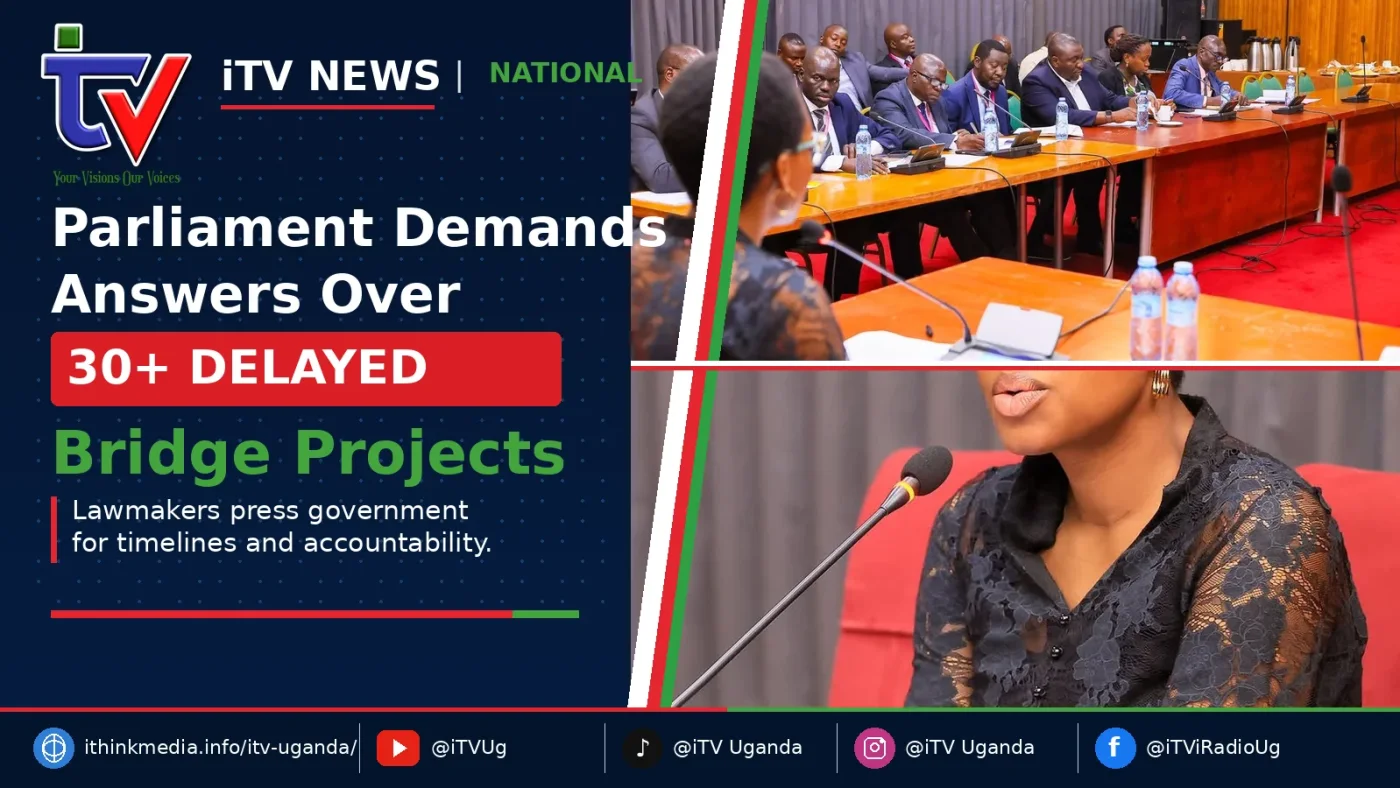
KAMPALA, Uganda — Parliament is demanding clear timelines from the Ministry of Works and Transport over delayed commitments to construct more than 30 bridges on Uganda's national road network, as lawmakers intensify scrutiny of long-standing infrastructure promises.
The Committee on Government Assurances and Implementation is examining commitments previously made by government to Parliament and wants the ministry to explain what stalled the bridge projects, how far each has progressed and when outstanding works will be completed.
Deputy Committee Chairperson Anna Adeke Ebaju said MPs require concrete implementation timelines rather than repeated assurances without corresponding delivery.
“We want to understand what stalled these projects and when the ministry expects to deliver on the commitments,” Adeke said.
Earlier commitments included 37 bridges
Parliament's review covers government commitments on national road and bridge infrastructure made over previous financial years.
Official parliamentary information refers to commitments involving approximately 400 kilometres of roads and 37 bridges during the 2022/2023 financial period, highlighting the scale of infrastructure whose implementation has attracted scrutiny.
The committee is assessing how many of those commitments were fulfilled, which projects remain outstanding and what financial, contractual or administrative challenges prevented completion within the expected periods.
MPs say communities should be able to know when infrastructure promised by government will actually be delivered.
MPs challenge COVID-19 explanation
The committee has also questioned explanations attributing some earlier implementation delays to restrictions associated with the COVID-19 pandemic.
Robert Ssewagudde, the parliamentary representative for Persons with Disabilities, challenged the explanation, arguing that essential services and workers were permitted to operate under established arrangements during the pandemic restrictions.
He questioned why critical bridge projects could not have continued under appropriate procedures where the infrastructure was considered essential to movement and service delivery.
The committee has not concluded that COVID-19 played no role in the delays. Rather, MPs are demanding a more detailed explanation of how restrictions affected individual projects and what other factors contributed to the failure to deliver the promised infrastructure.
Bridges central to local connectivity
The parliamentary scrutiny goes beyond construction statistics because bridges frequently determine whether communities can access markets, schools, health facilities and neighbouring districts throughout the year.
A delayed or deteriorated crossing can force motorists, traders and residents to travel considerably longer distances, while communities separated by rivers and wetlands can face severe transport disruption during rainy seasons.
For farmers, reliable bridge infrastructure can determine whether produce reaches markets in time. For patients and schoolchildren, an inaccessible crossing can directly affect access to health and education services.
Lawmakers therefore want the ministry's explanations to demonstrate not only how money has been spent but also when communities will receive the infrastructure promised to them.
Works Ministry managing wider infrastructure pressure
The scrutiny comes as the Ministry of Works and Transport manages a large national portfolio of road rehabilitation, upgrading and bridge construction projects amid funding, land-acquisition and maintenance pressures.
Works and Transport Minister Fred Byamukama recently told legislators that the ministry currently has 11 bridge-development projects comprising 30 bridges under construction across the country.
The ministry has also identified delayed land acquisition, funding constraints, climate-related damage and other implementation challenges as factors affecting road infrastructure projects.
Those ongoing projects should not automatically be treated as identical to every historical bridge commitment now under review by the Government Assurances Committee. Parliament's inquiry is intended to establish the status of the specific commitments made to the House.
Committee wants project-by-project answers
The Committee on Government Assurances and Implementation is responsible for following up promises and undertakings made by government ministers and other public officials before Parliament.
Its bridge inquiry is expected to establish the status of outstanding projects, reasons for delays, available financing and revised delivery timelines.
That approach could help distinguish projects delayed by lack of funding from those affected by procurement disputes, land acquisition, contractor performance, technical difficulties or other administrative problems.
For communities waiting for the crossings, however, the central question is simpler: when will the bridges actually be completed?
Parliament's latest scrutiny places pressure on the Ministry of Works and Transport to move beyond general explanations and provide measurable timelines against which the outstanding commitments can be tracked.