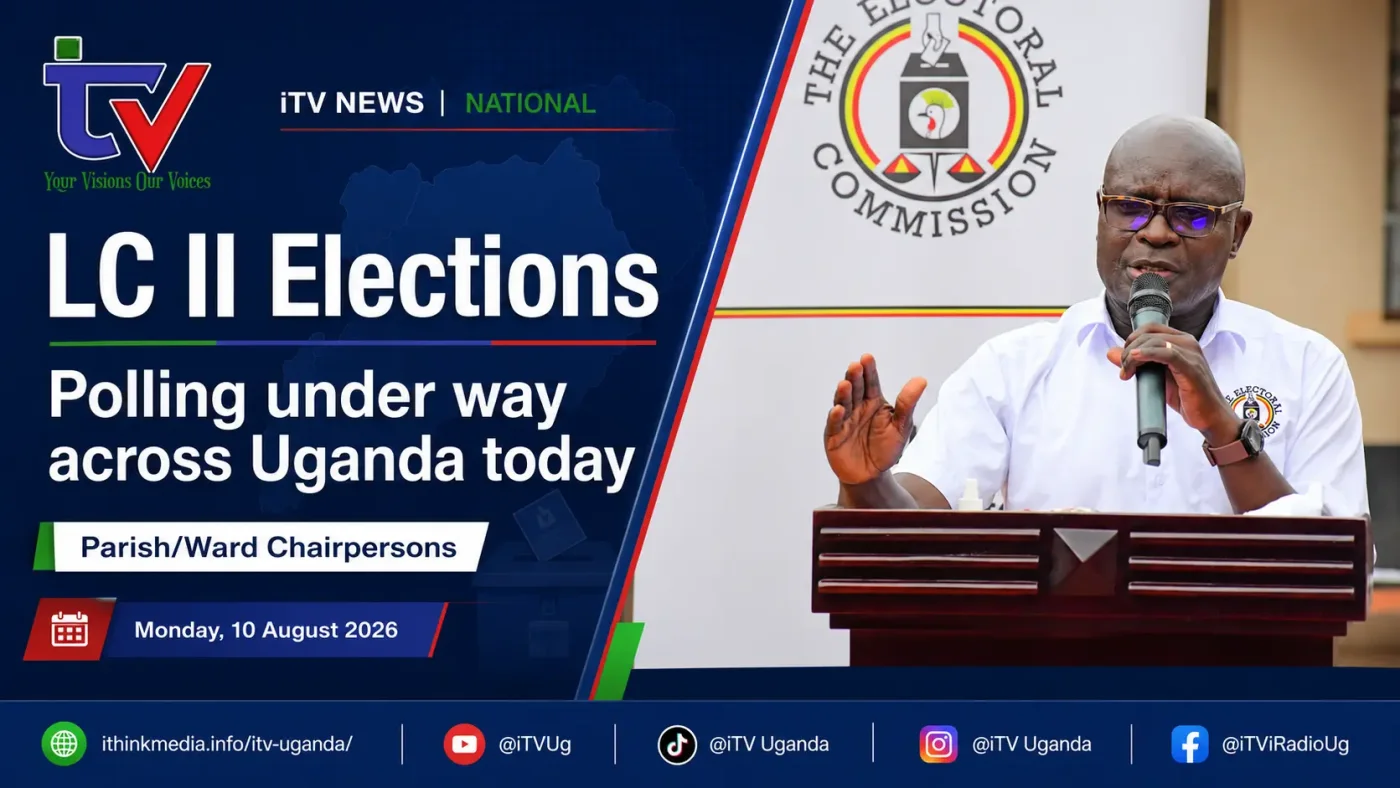
KAMPALA, Uganda — Elections for Local Council II chairpersons are being conducted across Uganda on Monday, 10 August 2026, as the country concludes another major stage of its administrative-unit electoral programme.
The Electoral Commission says the exercise is taking place in 10,718 parishes and wards across the country, following nominations on 3 August and a six-day campaign period that ran from 4 to 9 August.
Unlike the LC I elections, in which registered village residents directly participated, the LC II election operates through the parish or ward council. Members of the village executive committees within each parish or ward constitute the council that elects the LC II chairperson.
How the LC II election works
Under the Electoral Commission framework, the administrative-unit election process progresses from village level to parish or ward level.
Following the election of LC I chairpersons on 28 July, village executive committees were constituted. Members of those executive committees now form the Parish or Ward Council for purposes of electing the LC II chairperson.
The Local Governments Act provides for the election of village and parish or ward council chairpersons through the lining-up method, with voters lining behind a nominated candidate, the candidate's representative, portrait or symbol.
The Electoral Commission says candidates for LC II chairperson were nominated on 3 August before campaigning began the following day and concluded on Sunday, 9 August.
Who can contest?
Electoral Commission spokesperson Julius Mucunguzi has explained that eligibility to contest for LC II chairperson is drawn from members of the elected LC I executive committees, including LC I chairpersons, subject to the rules governing special-interest-group representatives.
After the election of the LC II chairperson, members of the parish executive committee are nominated and approved in accordance with the electoral guidelines.
The arrangement means Monday's elections are fundamentally different from a conventional nationwide secret-ballot election in which every registered adult resident goes to a polling station to cast an individual ballot.
Grassroots government takes shape
The LC II structures sit at parish and ward level and form an important part of Uganda's decentralised local-government system.
Local Government officials have emphasised that village and parish structures provide a direct connection between citizens and government, including in identifying local development priorities, monitoring public services and promoting accountability within communities.
The elections come after a prolonged period in which the terms of local council office holders were repeatedly extended as the government and Electoral Commission worked towards organising fresh administrative-unit elections.
Parliament was formally informed in July that LC I elections would take place on 28 July and LC II elections on 10 August, with existing office holders remaining in place until newly elected leaders formally assumed office.
Attention turns to results
Individual chairpersons can be declared at parish or ward level after the respective electoral process is completed. However, a consolidated nationwide outcome should only be treated as official when released or confirmed by the Electoral Commission.
As voting and declarations proceed around the country, iTV Uganda will continue monitoring official Electoral Commission information and verified reports from districts and cities before reporting broader national results or claims concerning party performance.
The conclusion of the LC II elections will establish a new layer of elected grassroots leadership across Uganda's parishes and wards, completing the progression of the 2026 administrative-unit elections from village to parish level.