
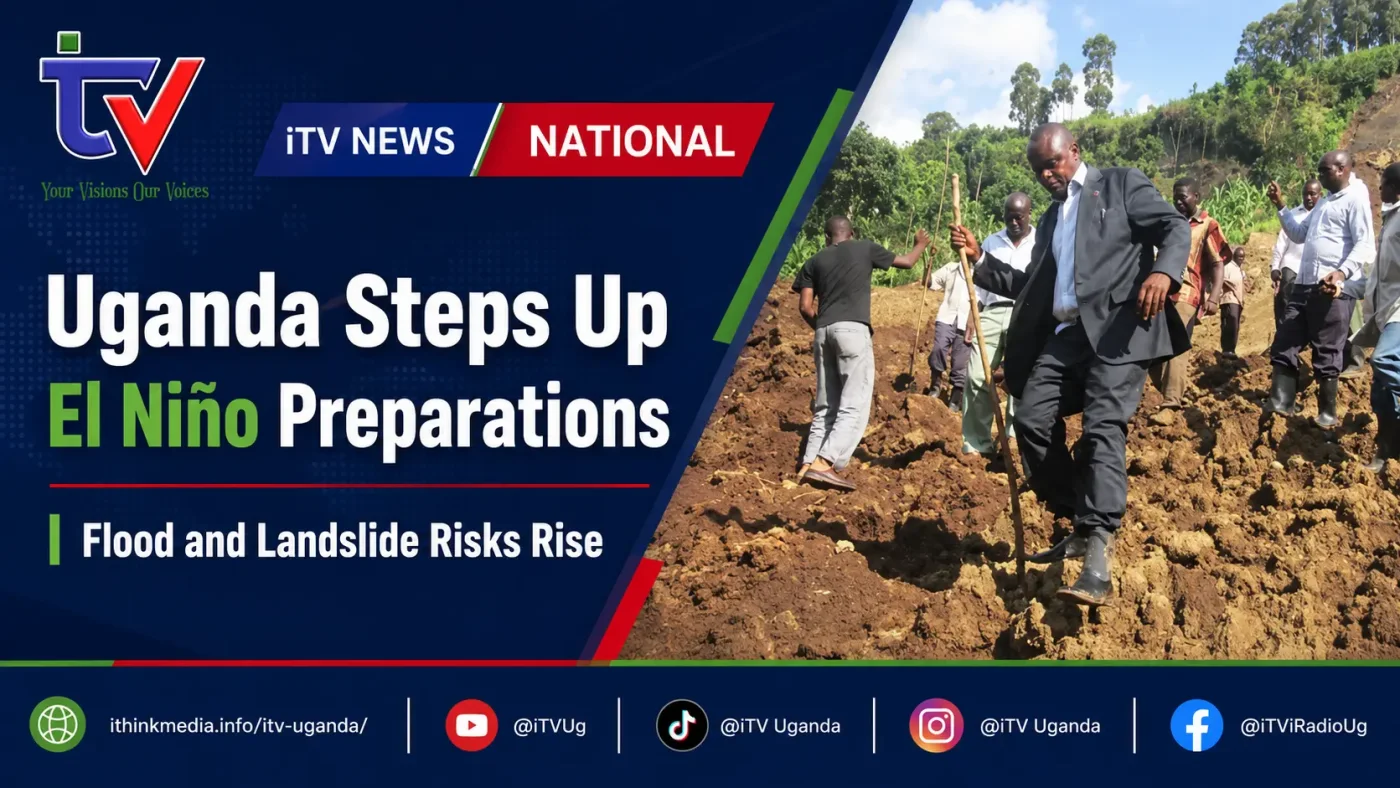
KAMPALA, Uganda — Uganda is stepping up preparations for a potentially wetter-than-normal September–December rainy season as authorities warn that anticipated El Niño conditions could increase the risk of flooding, landslides, infrastructure damage, disease outbreaks and disruption to livelihoods.
The Ministry of Water and Environment issued an early warning on 30 July saying global climate monitoring centres were indicating an increased likelihood of an El Niño event developing during the second half of 2026, with possible persistence into 2027.
The ministry cautioned that the exact magnitude and impacts are still being assessed, but preliminary climate outlooks indicate a high probability of above-normal rainfall episodes in several parts of Uganda during the September–December season.
Flood-prone lowlands, urban centres with inadequate drainage, river catchments, wetlands and mountainous regions susceptible to landslides are among the areas considered particularly vulnerable.
Road network placed on alert
The Ministry of Works and Transport says preventive maintenance is already being undertaken on vulnerable parts of Uganda's road network in preparation for excessive rainfall.
Senior ministry communications officer Allan Ssempebwa said the work includes drainage improvements and routine maintenance of gravel roads, particularly where roads cross wetlands, low-lying terrain and watercourses that could overflow during periods of intense rainfall.
Areas receiving particular attention include Kisoro and the wider Kigezi Sub-region, the Rwenzori and Elgon mountainous areas and parts of central Uganda where road infrastructure passes close to water basins.
The ministry has also activated emergency-response arrangements at 24 service and maintenance stations around the country to respond to roads that could be damaged, submerged or cut off by flooding.
Kampala intensifies drainage work
In Kampala, the Capital City Authority has intensified the clearing and desilting of drainage channels as it prepares for heavier rainfall.
KCCA says teams have been working on drainage channels around Luwum Street, William Street and other parts of the city, including the Nakivubo drainage system, removing rubbish and accumulated soil that could obstruct stormwater.
The authority has repeatedly identified poor waste disposal as one of the factors worsening flooding when rubbish blocks drainage channels during heavy downpours.
KCCA is also expanding drainage infrastructure in areas where existing systems have struggled to cope with runoff. Around Ssebaana and Allen roads, about 18 culvert crossings have been introduced to direct water towards the Nakivubo Channel.
An underground drainage culvert along Namirembe Road is also nearing completion as part of efforts to improve the movement of stormwater from the city centre into the wider drainage network.
Emergency trucks and response teams are expected to be positioned in high-risk parts of Kampala once the heavier rains begin.
Farmers urged to manage excess water
The Ministry of Agriculture, Animal Industry and Fisheries is urging farmers to prepare for excessive rainfall by improving water management, protecting soil and taking advantage of opportunities to harvest rainwater.
Permanent Secretary Maj Gen David Kasura-Kyomukama has advised farming communities to capture and store excess water where possible rather than allowing uncontrolled runoff to destroy crops or wash away soil.
Farmers working on steep terrain are being encouraged to use appropriate erosion-control measures and avoid cultivation practices that leave loose soil exposed on slopes.
Such precautions are particularly important in mountainous districts where prolonged or intense rainfall can trigger erosion, mudslides and landslides.
Health authorities prepare for disease risks
Health officials are also warning that excessive rainfall and flooding can increase the risk of disease by contaminating water sources, damaging sanitation facilities and leaving stagnant water in which mosquitoes can breed.
Director of Public Health Dr Dan Kyabayinze said measures previously used by the Ministry of Health remain relevant, including strengthened disease surveillance, additional medicines and supplies, chlorination of water sources and intensified malaria prevention.
Health education, community mobilisation, trained Village Health Teams and the mapping of areas considered vulnerable to outbreaks are also part of the public-health response.
Government calls for early action
The Ministry of Water and Environment has called on government institutions, local authorities, communities, businesses and other stakeholders to strengthen disaster preparedness before the rains intensify.
Its recommendations include clearing drainage channels and flood pathways, strengthening emergency-response plans, avoiding settlement and cultivation in flood- and landslide-prone areas and preparing contingency measures in climate-sensitive sectors such as agriculture, health, transport, water and infrastructure.
The ministry has stressed that the current warning is an early outlook rather than a declaration that every part of Uganda will experience destructive rainfall.
Weather conditions will continue to be monitored, with authorities expected to issue more detailed forecasts as the September–December season approaches.
Lessons from previous heavy rains
Uganda has experienced the destructive consequences of periods of unusually heavy rainfall before, including floods, landslides, damaged roads and bridges, destroyed homes and disruption to livelihoods in several parts of the country.
Mountainous areas around Elgon, the Rwenzori region and south-western Uganda, as well as low-lying urban settlements and communities around rivers and wetlands, remain especially sensitive to prolonged or intense rainfall.
The government's early-warning approach is intended to give communities and institutions time to reduce those risks before emergency conditions develop.
With the September–December rainy season approaching, attention will now turn to whether drainage systems, roads, health facilities, farms and local disaster-response structures are adequately prepared if the anticipated wetter conditions materialise.