
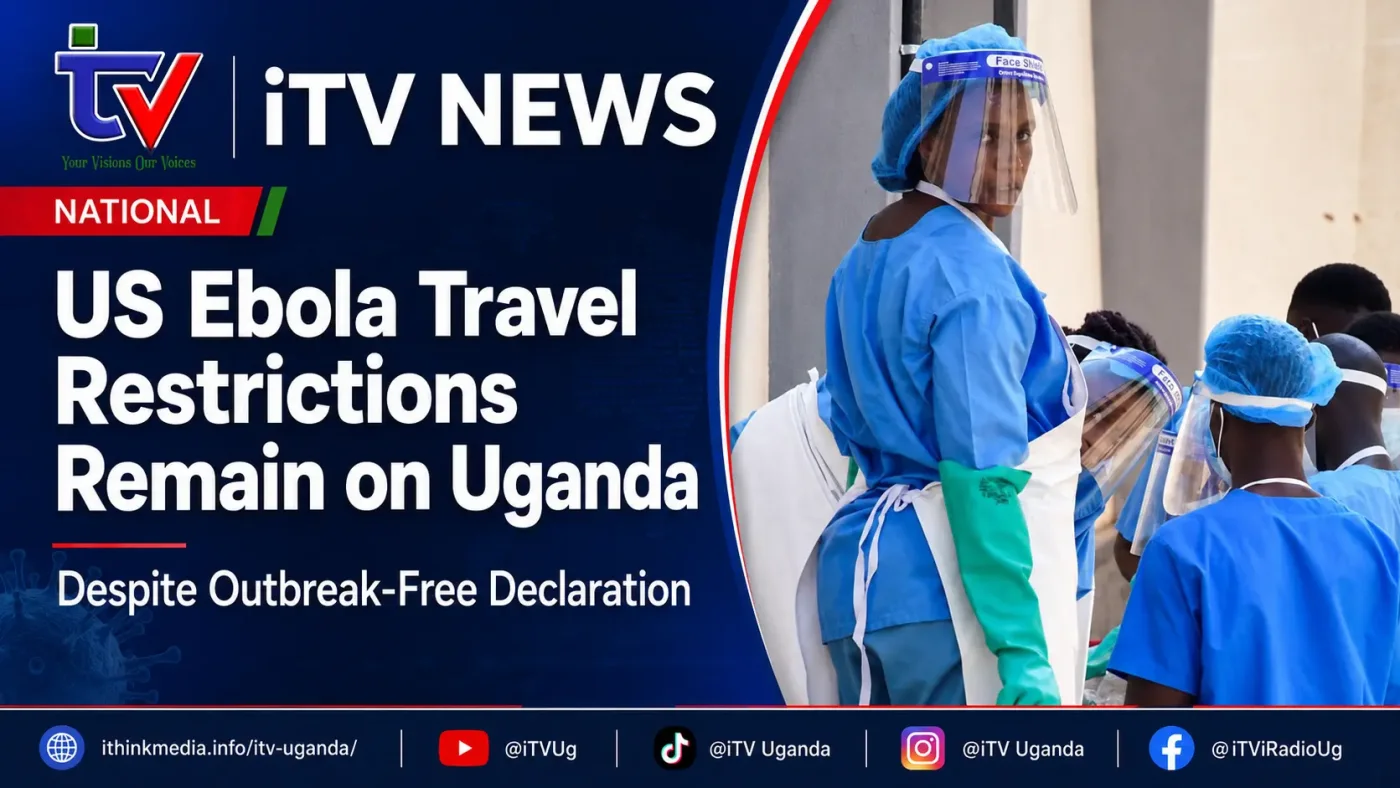
KAMPALA, Uganda — Uganda has officially declared its Ebola outbreak over, but travellers heading to the United States still need to pay close attention to temporary American entry and screening measures linked to the 2026 Ebola outbreak.
Uganda declared itself Ebola-free on 28 July 2026 after completing the required period without a new confirmed domestic case. However, current guidance from the US Centers for Disease Control and Prevention continues to apply special travel measures to people who have recently been in Uganda.
The rules do not amount to a blanket ban on everyone travelling from Uganda to the United States. What happens depends partly on a traveller’s immigration or citizenship status and whether they have also recently been in the Democratic Republic of Congo.
What happens if you have recently been in Uganda?
The CDC says temporary entry restrictions remain in place for certain categories of travellers who have been physically present in Uganda within the previous 21 days.
US citizens and US nationals who have been in Uganda, but have not recently been in the Democratic Republic of Congo, are not barred from entering the United States.
They must, however, enter through designated US airports where public-health screening is conducted.
The CDC also says the temporary entry restrictions cover certain other travellers, including US lawful permanent residents, commonly known as Green Card holders, who have recently been in Uganda or South Sudan.
Travellers should therefore establish how the rules apply to their individual status before beginning their journey rather than assuming that possession of a valid visa, residence document or airline ticket automatically removes the public-health requirements.
Four US airports are handling the screening
Travellers who have been in Uganda during the preceding 21 days and are permitted to enter the United States are currently being routed through four designated airports for enhanced public-health screening.
They are Washington Dulles International Airport, Hartsfield-Jackson Atlanta International Airport, George Bush Intercontinental Airport in Houston and John F. Kennedy International Airport in New York.
The requirement also applies where a traveller only passed through Uganda on a connecting flight during the relevant 21-day period.
Airlines may therefore have to change or rebook an affected passenger’s itinerary so that entry into the United States occurs through one of the designated airports.
What happens during screening?
According to the CDC, travellers undergoing entry screening may be asked about their recent travel history and whether they have experienced symptoms associated with Ebola.
The screening process includes a temperature check and observation by CDC personnel for signs of illness.
Travellers may also be enrolled in an automated CDC messaging programme reminding them to monitor their health for 21 days after leaving the affected country.
Some people may undergo an additional public-health assessment depending on where they travelled and the activities they undertook while there.
Most travellers who do not have symptoms are allowed to continue to their final destination after completing the screening process.
The 21-day period matters
The key period under the current system is 21 days after a person leaves Uganda.
The CDC says people who were in Uganda more than 21 days before travelling to the United States do not need to undergo the special Ebola public-health entry screening associated with recent presence in the country.
Travellers who recently left Uganda are advised to monitor themselves for possible Ebola symptoms during the 21-day period.
Possible symptoms include fever, headache or body aches, unusual weakness, sore throat, diarrhoea, vomiting, stomach pain, rash and unexplained bleeding or bruising.
A person who becomes ill after recent travel should avoid travelling and inform health professionals about the recent travel history before seeking in-person medical care.
Uganda and DRC are treated differently
Travellers should also understand that the United States currently applies significantly stricter rules to people who have recently been in the Democratic Republic of Congo.
Under current CDC guidance, travellers who have been in the DRC within the previous 21 days — including US citizens and nationals — are not permitted to board commercial flights bound for the United States until the 21-day period has passed.
This can also apply where a passenger transited through an airport in the DRC without leaving the aircraft.
That distinction is particularly important for travellers whose journey or recent travel history involves both Uganda and the DRC.
Why do measures remain after Uganda’s Ebola-free declaration?
Uganda’s declaration on 28 July means the country successfully brought its domestic outbreak to an end. It does not automatically terminate public-health measures imposed by another country.
The United States maintains its own assessment and legal framework governing when temporary Ebola-related entry measures are introduced, renewed or withdrawn.
The regional situation also remains important. The CDC continues to monitor the much larger Ebola outbreak in neighbouring Democratic Republic of Congo and has warned that frequent cross-border movement creates an ongoing risk of the disease being reintroduced into neighbouring countries, including Uganda.
Uganda’s Ministry of Health has therefore continued surveillance and preparedness measures even after declaring the domestic outbreak over.
Travellers should check again before flying
Because outbreak conditions and international public-health measures can change quickly, travellers planning journeys from Uganda to the United States should check the latest CDC and airline requirements shortly before departure.
Those with recent travel to the DRC should be particularly careful because the American rules applying to recent presence there are considerably stricter than those applying to Uganda alone.
For Ugandan travellers, the key message is that being declared Ebola-free does not yet mean that every US travel measure associated with the outbreak has disappeared. Understanding the 21-day rule, eligibility to enter and designated-airport screening requirements can help prevent unexpected disruption at the beginning of a journey.